



Delhi Air Pollution: Blaming won’t Save Us—Our Actions will
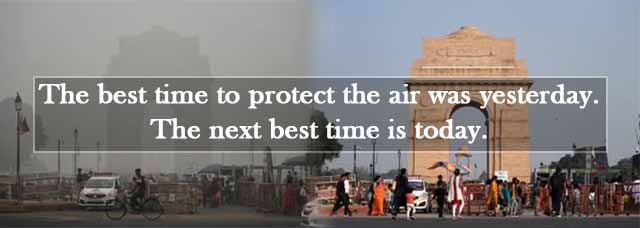
If you’ve opened your weather app lately and saw Delhi AQI: 500+, that’s not a glitch—it’s the new normal. Welcome to Delhi after Diwali, where the city skyline turns gray, and the air tastes like burnt smoke.
The Not-So-Fun Facts
Let’s get straight to it. The WHO’s safe limit for PM 2.5 (those tiny particles that sneak into your lungs) is a maximum of 5 µg/m³ for a 24-hour period. Delhi’s current AQI readings? Around 350–450 and spiking much higher on the worst days. This means the city is typically breathing air over 10 times the WHO’s maximum safe daily limit. That’s like breathing second-hand smoke all day.
The main culprits stay the same every year:
- Crop burning in neighboring states.
- 10+ million vehicles clogging the roads.
- Construction dust & industrial smoke.
- Still winter air that traps everything in place.
Delhi becomes a slow-motion gas chamber, and the “toxic air” headline returns right on schedule.
The Human Side effects of Toxic Air
This isn’t just about hazy sunsets or cancelled jogs. Prolonged exposure to severe AQI leads to respiratory issues, fatigue, headaches, and in the long run—heart and lung diseases. Kids and older adults face the worst impact.
Why It Keeps Happening
Because every winter, we hit panic mode instead of prevention mode. Bans, fines, and quick fixes come in waves, but the root issues—unchecked emissions, poor waste handling, and lack of year-round monitoring—remain. Air, water, and soil pollution are connected; ignoring one means amplifying the others.
What Can Actually Help (Besides Hoping for Rain)
Here’s what could make a real difference:
- Real-time environmental testing to track pollutants precisely.
- Cleaner wastewater treatment, since poor water management worsens air toxins.
- Sustainable industrial operations to curb smoke and waste.
- Green infrastructure—smarter construction, more trees, cleaner planning.
That’s where Sai BioCare Pvt. Ltd. steps in—providing NABL-accredited air and water testing and building Eco-friendly wastewater systems that cut pollution at its source. We focus on making sustainability part of everyday industry, not just a yearly reaction.
So What Can You Actually Do?
Alright, let’s skip the “wear a mask” routine—you already know that. Here’s what will actually move the needle, if enough of us start doing it:
- Rethink your commute.
Fewer cars = cleaner skies. Try carpools, the metro, or even flexible workdays. If your office allows one WFH day a week, that’s 52 fewer days of emissions a year—from just one person. Multiply that by a company, and the difference is huge. - Adopt a local tree.
Not just planting—maintaining. Join your RWA (Resident Welfare Association) or colony park in planting native trees (peepal, neem, and jamun). They trap more particulate matter and actually survive Delhi’s dust. Bonus: they cool your street better than any AC. - Support cleaner brands.
From eco detergents to low-emission paints, vote with your money. The more demand for sustainable products, the faster industries pivot. - Hold your space accountable.
If your apartment or office building has a diesel generator or construction going on without dust nets — call it out. Small civic pressure adds up. - Make sustainability social.
Post less outrage, more ideas. Highlight eco-projects, tag startups doing real work (like Sai BioCare and others), and start a conversation that educates without guilt-tripping. Awareness that feels cool spreads faster.
The Bigger Picture
Delhi’s air won’t fix itself—but awareness backed by action can. Clean air isn’t a luxury; it’s survival. The smog will lift only when science, policy, and public behavior finally align.